Why Concrete Needs Water After It’s Poured: The Curing Window That Decides Strength
If I had to pick one site practice that gets skipped the most and causes damage the least visibly, it would be curing. Everyone on site understands that concrete needs to be mixed correctly and poured carefully. Far fewer people treat what happens in the week or two after the pour with the same seriousness, and that gap is exactly where a lot of quiet, long-term strength loss happens.
Concrete Doesn’t Get Strong by Drying. It Gets Strong by Hydrating.
This is the single misunderstanding I try hardest to correct on site. Concrete strength does not come from water evaporating and the mix simply drying out, the way it might look to someone watching from the outside. It comes from hydration, a chemical reaction between cement and water that continues for days and, to a lesser extent, weeks after the pour, steadily building the crystalline structure that gives concrete its strength. If the water needed for that reaction disappears too early, evaporating off the surface before hydration is complete, the reaction simply stops wherever it was, and the concrete never reaches the strength it was designed for.
What Actually Happens When Curing Is Skipped
- Strength loss of up to roughly 40 percent compared to properly cured concrete of the same mix design
- Plastic shrinkage cracking on the surface, caused by rapid early moisture loss before the concrete has gained enough strength to resist the resulting shrinkage stress
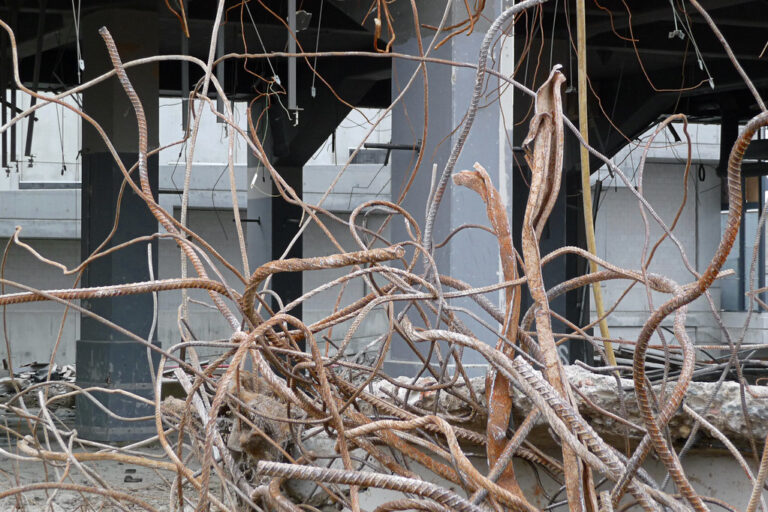
- A more porous, less durable concrete overall, which allows moisture and air to reach the reinforcement faster and accelerates corrosion over the structure’s lifetime
None of these show up the day after the pour. They show up as a structure that develops surface cracking within its first year, or as reinforcement that starts corroding a decade earlier than it should have, and by the time either becomes visible, it is far too late to go back and cure the concrete properly.
The Rules I Actually Enforce on Site
- Start curing as soon as the concrete has set enough to not be damaged by water or covering, not hours later once someone remembers
- Maintain curing for a minimum of 7 days, with 14 to 28 days being meaningfully better for critical structural elements
- Use whichever method suits the element: ponding for flat surfaces, wet gunny bags or hessian for vertical faces, continuous sprinkling, or a proper curing compound where water curing is impractical
- In hot weather, which describes most of the year across much of Pakistan, increase curing duration and frequency, since evaporation happens dramatically faster in high heat than the standard guidance assumes
The 7 to 14 Day Window Is the One That Matters Most
Concrete gains the majority of its ultimate strength within the first 7 to 14 days after pouring, which is exactly why that early window is the most critical period to protect, not an afterthought once the pour itself is done. The biggest mistake I see repeated across sites of every size is stopping curing too early, often because the crew assumes the job is finished once the concrete looks set and hard on the surface. Hard on the surface and fully hydrated internally are two very different things, and only one of them determines the final strength of the structure.
Why I Keep Repeating This to Every Site Crew
Curing has no dramatic moment where a mistake becomes obvious. Nobody sees a crack form the day it happens, and nobody sees strength quietly disappear in real time. That invisibility is exactly why it gets deprioritized under time pressure, and exactly why I insist on treating it as a non-negotiable step on every pour I supervise, not an optional extra once everything else is already done.
Watch the Full Video in Urdu
I explained the hydration process and the real cost of skipping curing in Urdu for my Instagram audience, because this is one of the most consequential and most ignored practices on any construction site. Watch the full reel embedded above, and follow @teeqiii on Instagram for more of this series on concrete quality control.
If you want your curing schedule reviewed before your next pour, reach out through my contact page.