Can You Use Curing Compound Instead of Water Curing Concrete?
I wrote recently about why skipping curing altogether is one of the most damaging shortcuts on a construction site, and the follow-up question I get constantly is whether spraying a curing compound instead of doing traditional water curing is a legitimate alternative or just a shortcut in disguise. The honest answer is that it is a genuinely valid method, but only if you understand that it works on a completely different principle than water curing, and treating it the same way will not give you the same result.
Two Different Jobs: Giving Water vs Keeping Water
Water curing works by continuously supplying moisture to the concrete surface, replacing whatever evaporates so the hydration reaction never runs short. A curing compound works the opposite way. It is a liquid sprayed onto fresh concrete that forms a thin membrane or film across the surface, sealing it and trapping the concrete’s own mix water inside so it can complete hydration on its own, without needing any external water added at all. One method actively gives water. The other method actively prevents water from leaving. They are solving the same underlying problem from opposite directions.
Why Curing Compound Earns Its Place on Real Sites
- Water savings, which matters enormously in a water-scarce country like Pakistan where continuous ponding or sprinkling across a large pour can be a genuine resource strain
- Labor savings, since there is no crew needed for daily watering over a one to two week curing period
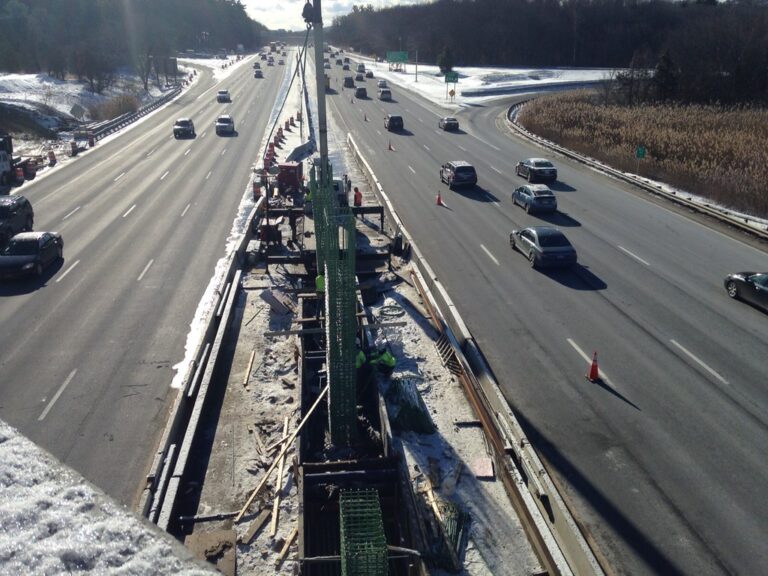
- Practicality on roads, bridges, large slabs, and vertical surfaces, where maintaining continuous water contact is difficult or simply impossible with traditional methods
Where It Falls Short and Why You Still Need to Know the Limits
- It never adds water, it only retains what is already there, so for the absolute best achievable strength, traditional water curing still outperforms a compound in most controlled comparisons
- Timing is critical. The compound has to be sprayed right as bleed water finishes evaporating from the surface, not too early and not too late, and coverage has to be uniform across the entire surface or you end up with patchy protection
- The film it forms can interfere with the bonding of tiles, paint, or other surface finishes applied later, which means the compound choice has to account for what happens to that surface afterward
- Quality curing compounds should meet a recognized standard, commonly referenced as ASTM C309, rather than being an unspecified generic product picked purely on price
Where the Technology Is Heading
One development worth knowing about is self-curing concrete, which incorporates materials inside the mix itself, often superabsorbent polymers, that release water internally over time as hydration consumes it. Instead of curing being something applied from outside after the pour, the concrete essentially manages part of its own curing process from within. It is not yet the default choice on most sites I work on, but it is a good example of where concrete technology is heading as water scarcity becomes a bigger constraint on construction methods generally.
My Practical Recommendation
For critical structural elements where you can control site logistics easily, like a slab you can pond or a column you can wrap in wet hessian, I still lean toward traditional water curing because the strength outcome is more reliably at its best. For large horizontal pours, roads, or vertical surfaces where consistent water application is genuinely difficult, a properly specified, correctly timed curing compound is a legitimate professional choice, not a compromise. The mistake is not choosing a compound. The mistake is choosing one without understanding timing, standard compliance, and what it means for later surface finishes.
Watch the Full Video in Urdu
I explained curing compounds and how they differ from water curing in Urdu for my Instagram audience, following directly from the earlier video on why curing matters at all. Watch the full reel embedded above, and follow @teeqiii on Instagram for the rest of this concrete quality control series.
If you are deciding between curing methods for an upcoming pour, reach out through my contact page and I can help you weigh the right option for your specific site.