What Is Buckling? Slenderness Ratio and Column Stability Explained
One of the easiest ways I have found to explain buckling to a student or a client with no engineering background is to hand them a thin plastic ruler and ask them to push down on both ends. It does not crush. It bows out sideways, suddenly, well before you have pushed anywhere near hard enough to actually break the material. That sideways snap is buckling, and it is one of the more counterintuitive failure modes in structural engineering because it has almost nothing to do with material strength.
A Stability Failure, Not a Strength Failure
When you push down on the two ends of a slender member, whether it is a ruler, a column, or a scaffolding prop, it can fail in two completely different ways. A short, stocky column crushes, meaning the material itself reaches its compressive limit and gets squeezed apart. A long, slender column buckles instead, meaning it suddenly bows sideways and loses its ability to carry load, often at a fraction of the force that would have crushed the same material in a shorter, stockier shape. Buckling is a geometry and stability problem, not a material strength problem, and that is exactly why it can catch people off guard. The material is fine. The shape simply cannot stay straight under that load anymore.
The Number That Predicts It: Slenderness Ratio
Whether a member is at risk of buckling comes down to its slenderness ratio, essentially a comparison of its effective length to its cross-sectional stiffness. The relationship between length and buckling capacity is not straight-line either. It follows Euler’s classical buckling formula, where capacity drops with the square of the length. Double the unsupported length of a column, and its buckling capacity does not just halve, it drops to roughly a quarter. That squared relationship is why even a modest increase in unsupported length can turn a perfectly safe member into a genuine risk.
Where This Shows Up on Real Sites
- Shuttering props supporting a slab before the concrete has gained strength, especially when they are set up taller and more spread out than the formwork design allows
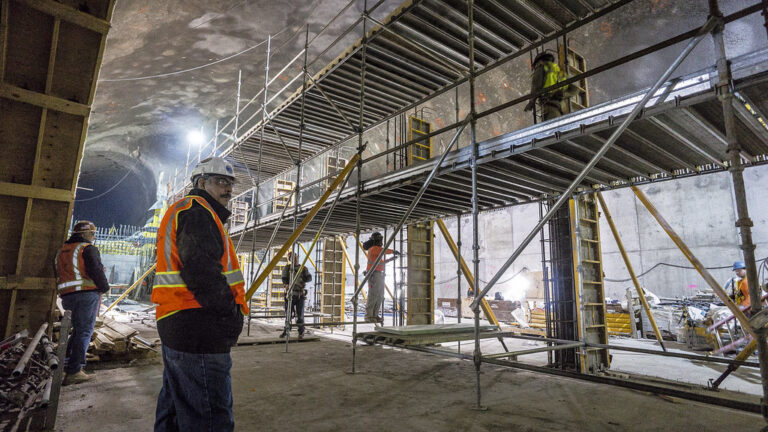
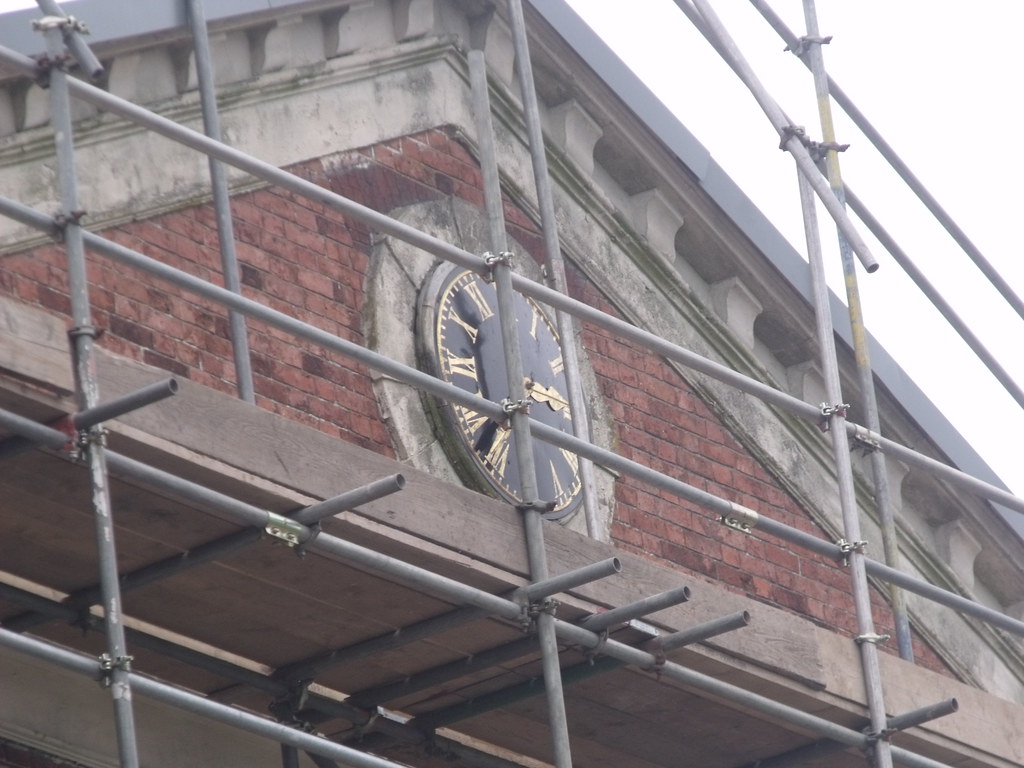
- Scaffolding, where a missing brace or an overextended lift dramatically increases the unsupported length of a vertical member
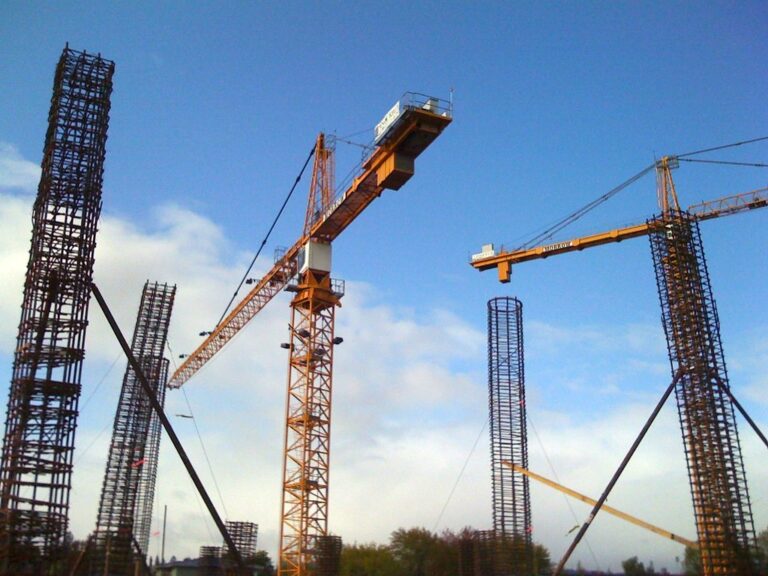
- Column reinforcement itself, where the ties around the main vertical bars exist specifically to stop those slender bars from buckling outward under compression before the concrete around them has cured
That last point is worth sitting with. Ties in a column are not just there to hold the main bars in position while concrete is poured. They are an active part of preventing a genuine buckling failure mode in the reinforcement, which is exactly why tie spacing is specified so precisely in structural drawings and why skipping ties to save time or material is one of the more dangerous shortcuts I see attempted on site.
How You Actually Prevent It
- Add bracing to reduce the effective unsupported length of the member
- Reduce slenderness directly, either by shortening the span or increasing the section size
- Choose a more efficient cross-section, like a hollow or I-shaped profile, which resists buckling better than a solid section of the same material quantity
Why This Matters Even If You Never Design a Column
Even engineers who spend their careers on estimation and site supervision rather than structural design need to recognize buckling risk on sight, because it shows up constantly in temporary works, not just permanent structures. A scaffolding tower that looks fine from a distance but has a missing horizontal brace, or shuttering props that were stretched taller than the manufacturer’s safe height, are buckling risks waiting to happen, and they are entirely preventable if someone on site knows what to look for.
Watch the Full Video in Urdu
I explained this with a simple demonstration in Urdu for my Instagram audience, because seeing a member bow sideways makes the concept click far faster than reading the Euler formula cold. Watch the full reel embedded above, and follow @teeqiii on Instagram for more structural concepts explained simply.
If you are unsure whether temporary works or a structural element on your site carries buckling risk, reach out through my contact page before it becomes a problem.